Sunday, 15 May 2011

ANIMA MUNDI (1992) - a short addition to KOYAANISQATSI


ANIMA MUNDI
(1992, USA)

Like a missing chapter from Koyaanisqaatsi, director Godfrey Reggio assembled this film from stock footage, again commissioning a soundtrack from Philip Glass and again angling for an underlying theme of the natural world against mankind. If you've enjoyed the 'qatsi trilogy', this closely follows their template.


Commissioned by the World Wildlife Fund, (the original WWF), the remit was to present the diversity of animal life - ugly and beautiful, peaceful and aggressive, microscopic and huge. It's an intense montage of spectacular footage without any voiceovers or captions. In turns funny, eerie and astonishing, but with fewer surprises for anyone who watches a lot of animal documentaries, it's the music that makes this a hypnotic experience, despite its relatively short running time.


The repeated images of animals in close-up, staring straight at the camera, at the viewer, intercut with decimated rainforests, hits harder than the voiceovers that often wrap-up nature documentaries. After the smouldering levelled forest, we're face to face with a tiger or a chimpanzee. They look intelligent but helpless, weary of the destruction, patiently waiting for it to stop. Anima Mundi may best be watched as a support feature for Koyaanisqatsi.

Apparently this was only once released on DVD in 1998 (pictured at top), an all-region NTSC release with non-anamorphic 1.85:1 letterbox widescreen. The transfer isn't the highest quality, possibly only from an analogue source, and the compression is particularly poor for the first few shots of the film. But after that it's perfectly watchable and good enough to engross. But only 28 minutes long with no extras.


The best-known remnants from this project are two tracks from Philip Glass' score which were repeated in The Truman Show (1998), which also recycled cues from his Mishima (1985) and Powaqqatsi (1988) soundtracks.

My review of Koyaanisqatsi (1983) is here.

Notes on Anima Mundi on Philip Glass' website here.


Saturday, 14 May 2011

Updated MLB Power Poll

I was meaning to update the baseball power poll but have not had the time to write it until now. Baseball is also a sport where early success does not necessarily equal instant playoff appearances. So without further ado here is my feeling on how the power in MLB goes:

# TEAM NAME (Record) (Previous Rank)

1. Philadelphia Phillies (25-13) (2)
2. Cleveland Indians (24-13) (22)
3. Florida Marlins (23-15) (12)
4. San Francisco Giants (22-17) (3)
5. Tampa Bay Rays (23-16) (16)
6. Cincinnati Reds (22-17) (7)
7. Atlanta Braves (22-19) (5)
8. St Lous Cardinals (22-18) (14)
9. New York Yankees (20-17) (4)
10. Detroit Tigers (22-18) (10)
11. Boston Red Sox (19-20) (1)
12. Los Angeles Angels (22-18) (17)
13. Colorado Rockies (20-17) (9)
14. {tie} Oakland A's (20-19) (15)
14. {tie}. Texas Rangers (20-19) (8)
16. Kansas City Royals (20-19) (30)
17. Toronto Blue Jays (19-20) (23)
18. Milwaukee Brewers (18-21) (13)
19. Baltimore Orioles (18-20) (20)
20. Los Angeles Dodgers (19-21) (18)
21. Washington Nationals (18-21) (24)
22. Pittsburgh Pirates (18-21) (28)
23. Chicago White Sox (16-24) (11)
24. New York Mets (18-21) (27)
25. Chicago Cubs (17-21) (21)
26. Arizona Diamondbacks (16-22) (25)
27. San Diego Padres (16-23) (19)
28. Houston Astros (15-24) (26)
29. Seattle Mariners (16-23) (29)
30. Minnesota Twins (12-25) (6)

I, MONSTER (1971) - Cushing and Lee do Jekyll and Hyde... in 3D


I, MONSTER
(1971, UK)

Amicus Studios try horror in 3D...

The title is presumably a pun on Roger Corman's I, Mobster, missing out on the opportunity to sell the movie as Christopher Lee and Peter Cushing in a classic horror tale, with Lee adding to his formidable gallery of monsters. Besides the veiled title, the central characters' names have been changed from Jekyll and Hyde (to Marlowe and Blake), but Robert Louis Stevenson still gets a screen credit - a strange case indeed.

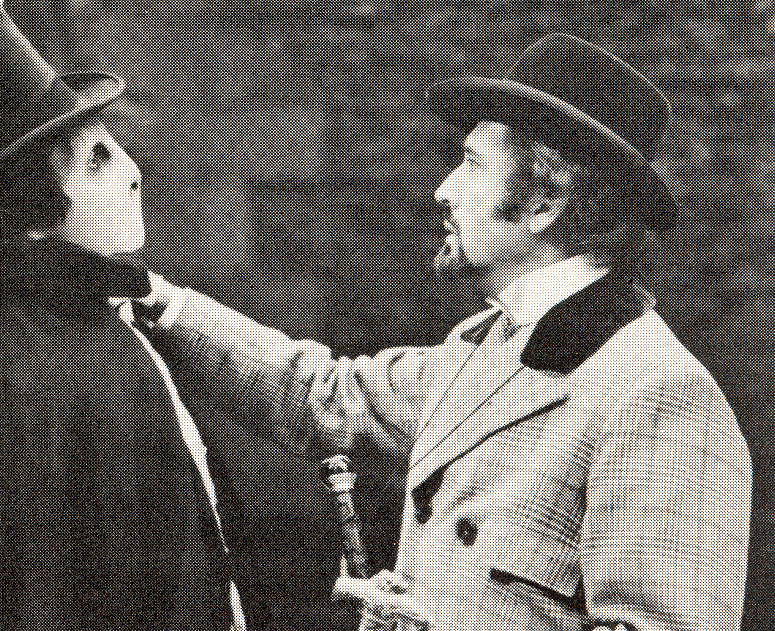
Lee enjoys the dual role, but plays Dr Marlowe (Jekyll) as uptight and boring, whereas Fredric March and Spencer Tracy played the character as relaxed and normal. As Blake (Mr Hyde), his appearance degenerates, bordering on comical. Perhaps it's the nasty teeth or the nasty wig. The transformations are mostly cheated, either instantaneous or seen only as shadows. This is disappointing because it's the most anticipated part of the story. More interesting is a 'no-face' make-up (below in a scene not in the final cut) used only in a nightmare.


Peter Cushing is excellent as always, though he could easily have managed the reams of dialogue pointlessly handed over to non-actor Mike Raven (Crucible of Terror). Stephen Weeks was only 22 when he directed this, but made a much better job of the eccentric Ghost Story (1974), recently reissued on DVD. The producer, Milton Subotsky, cheekily blamed all the shortcomings of this film on him.

There are some slight twists in this version. Marlowe is a Freudian psychiatrist rather than a medical doctor. Instead of drinking his experimental drugs, he injects them into a well-used vein, getting addicted in the process. But the story is overly simplified by removing the character of Dr Jekyll's wife, making his midnight wenching hardly transgressive at all. Any new angles in the script aren't as important as the way the story was filmed.


The production was originally designed to be released in 3D, using a lesser-
known process which didn't need special cameras (and therefore cheaper to make). Instead it was the camera moves and layers of action that were orchestrated to trigger 'the Pulfrich effect'. This method of 3D has occasionally been used on TV in the past, long before the new specially-built screens. All that was needed to view the action in 3D were glasses with the right eye slightly darkened. The cheapest Pulfrich glasses would be a pair of sunglasses with the left lens popped out.

When the producers looked at the rushes during the filming, they didn't think the 3D effect was working and abandoned the idea of releasing it 3D. How many scenes were actually shot for Pulfrich 3D has long been debated or dismissed. To me, a majority of the film was shot for 3D and can still be enjoyed. The few static 'flat' scenes start appearing about half an hour into the running time. The three basic types of 3D scene are as follows...

Basically, any time a character (or object) moves left-to-right across a static background, it will pop-out in Pulfrich 3D. Even if you just watch the film 'flat', you'll notice a dozen scenes of characters walking down the long corridor to Lee's study, moving left to right. The whole title scene is also filmed this way. There's even a bizarre scene in a pub where Lee is talking to a potential wench in a pub and the crowd is jostling them along the bar from left to right. The complex choreography of the scene is all for the 3D.

If the camera circles around the scene from right-to-left, the 3D works very well. The most spectacular 3D is in the daylight scenes (a misfire because most of the film takes place in the shadows of night and Lee's dingy house) when the camera circles a huge birdcage in a park. A variation is where the subject spins around - like the scene where Lee holds the mirror up to look at himself.

The third main example is Dr Marlowe's study, dominated by a long desk stacked high with a wall of chemical lab equipment - this layer of glass between the actors and the camera is the central example of the layered, deep-focus sets, carefully laid out for Pulfrich 3D. Any movement between the subject and the camera (like a knife) will 'kick out' in 3D.


While there's plenty of 3D around at the moment, I've been particularly interested in the 3D effects in I, Monster because they're the only example of British horror in this period to be shot this way, and certainly an unusual treat for fans of Cushing and Lee. Much has been written about what everyone involved thought of the 3D process, but I've not seen any writers trying it out for themselves. To me, the 3D works well for most of the film and brings many scenes to life, which the movie certainly needs.

The Optimum DVD from the UK in 2007 (pictured at top) is a sharp, clean-looking anamorphic widescreen presentation. This version was longer than my TV recordings of the film, adding several early scenes of Dr Marlowe in his study and some of Mike Raven's pontificating.

But many of the night-time scenes have been transferred far too darkly. All of Blake's night-time shenanigans are crushed into darkness compared to the TV version I was used to. When Blake stalks the wench emerging from the pub, the cobblestones are completely invisible in the shadows. This darkening of some of the film's action, also diminishes the 3D effects in the film. Perhaps we'll never see the day where I, Monster gets released with 3D glasses.


If you want to see it properly, Pulfrich 3D glasses are available online, for instance here...

Monday, 9 May 2011

WHO CAN KILL A CHILD (1975) - special screening and UK DVD


A truly underrated horror gem is getting an uncut DVD release in the UK - its digital debut here. Eureka Video is set to release the DVD at the end of the month. Better still, there's a special midnight screening of the film this Saturday at the Rio Cinema in Dalston, London. Details here from Cigarette Burns. Seems the queue is starting already...


My non-spoiler review of the film, written when the US DVD was released, is here. I'll update that article when I've compared the UK DVD as well.

Narciso Ibanez Serrador also directed La Residencia (The House That Screamed), which I reviewed here. Another extraordinary horror, it starred John Moulder-Brown (Vampire Circus) who is currently getting press coverage again, now that the BFI has restored and released Deep End, in which he co-starred with Jane Asher.

Saturday, 7 May 2011

AMERICAN - THE BILL HICKS STORY (2009) - the fearless, insightful, dead comedian


AMERICAN - THE BILL HICKS STORY
(2009, USA)

This recent documentary encouraged me to again soak up a load of Bill Hicks' wit and wisdom. I listened to the CD of his Shock And Awe performance for the first time. Particularly great for me because there was so much material about his visits to England. I was crying with laughter for the first time in ages. Maybe not the ideal thing to listen to in the car.


I've revered his stand-up routines ever since we were lucky enough to see two of his performances on TV in the UK. But despite being one of the most acclaimed comedians ever, his material was too fearless and angry for American TV. Besides the swearing and subject matter, he was critical of much about modern society, particularly America. He was talked about in all the press, but you could only really get to see him on stage as he toured endlessly around the States, and occasionally abroad in Britain (where he enjoyed huge audiences) and Australia.


Despite performing stand-up comedy for 16 years before his cruelly premature death at 32, there wasn't much of his work to see on home video or hear on record. Only when we realised what we'd lost, did more DVDs and CDs get released, not all of them professionally recorded. His routines are treasured by fans, studied with awe by other comedians, documented in several biographies and celebrated in a recent documentary, American - The Bill Hicks Story (2009).

The evolution of his career started early as he sneaks out of the house to perform comedy at an 'open mike' comedy club on a school night. An instant hit, his work evolves as he moves around the States and lurched in and out of excessive drug-taking and drinking.


But what makes his comedy funnier, angrier and unique is the research, attempting to educate and encourage his audiences to think. He regularly offers up examples of disparity, how we are manipulated by politicians, media and marketing for their own profit. My first thought on hearing about his death was that he had been assassinated. I actually thought that he was getting through to people so successfully, that he had been taken out.

Something the documentary misses entirely was his appetite for books and newspapers, and how he tried to rationalise injustice, greed and bad logic in the world. Coupled with a fearless attitude to taboo subjects and a confessional honesty about himself, he's as thought-provoking as he is funny. His concise, intelligent, shocking satire prefigured South Park and was often more controversial.


While I enjoyed learning more about his life, as told by his friends, family and fellow stand-up comedians, I wouldn't recommend American as an introduction to his work. It's great for finding out about the man behind the comedy, but first treat yourself to one of his shows. I didn't feel that any of his best routines were showcased, they were used to illustrate the story. Fine if you're familiar with his comedy, but not the best way to start with Bill.

He was passionate about musicians passionate about music. He contrasted his hatred of manufactured pop with his admiration of Hendrix, who played with supreme skill, emotionally involved and enjoying what his craft. Bill Hicks was and is the Jimi Hendrix of stand-up comedy.


Thursday, 28 April 2011

Disney On The Mind

I have been thinking of all things Disney since I planned my trip to Disneyland a few weeks ago. I have always been a huge fan of Disney, even though I am no longer a kid nothing reminds me of my childhood like a good Disney movie, song, or trip back to Disneyland itself. Recently I checked out a few documentaries that had to do with all things Disney, most of them can be viewed on netflix instant watch or rental. If you are into Disney like me and would like to see some interesting insights from the creators of Disney movies and music check out these films:


Waking Sleep Beauty

I saw this one a few months ago and found it to be a great look into Disney animation during the 80's and 90's. It has some footage you will never see anywhere else because it was filmed in the Disney studios by the animators who worked there. The focus is about how Disney animation was losing its way in the 80's and then hits like Little Mermaid, Aladdin, and Lion King got animation hot again and also made some of the best animated films ever. You get some insights that I feel does also not portray Disney studios in the best light but is its true to itself.


The Pixar Story


I always wanted to learn more about Pixar and how it became the great studio it is today. The Pixar Story is a little dated (was released in 2007) but does show a great story about how animators had to painstakingly animate these stories because they loved them so much. Pixar didn't just get lucky but got the best artists, writers, and directors to work together to make the best animated movies of today. It shows how the small company has become what it is today, worth a watch!


The Boys: The Sherman Brothers' Story

This movie focuses on the Sherman brothers, a team who wrote many of the best songs featured in Disney movies or at attractions in Disneyland. This is more about the relationship between the brothers and how they remained distant even though they worked together for many years. You get some great insight into Walt Disney himself, he worked with the brothers and they collaborated on Mary Poppins and the Jungle Book (to name a few). You do get some very good looks into Disney's past and how the studio used to run, this is a must see for Disney fans.


If you are in the bay area and are a huge Disney fan I strongly recommend you check out The Walt Disney Family Museum in San Francisco. I went here a few months ago on a trip and it was truly an amazing insight into who Walt Disney is and how he became the legend he is today. You can check out the web site here: Disney Museum.

Saturday, 23 April 2011

CAPRICORN ONE (1978) - faking a space mission

CAPRICORN ONE
(1978, USA)

What was intended as a satirical thriller has now fuelled conspiracy theorists' claim that the Moon landings were staged for the cameras. At the time Capricorn One was released, this was a wry and cheeky premise. That anyone now believes those incredible achievements were all a fake is more incredible than the Moon missions themselves.


Three astronauts are about to take off for a mission to Mars when the project leader hauls them out of the command capsule and whisks them away to a secret location. The life support system is faulty and the project has no hope of being successful. Unless the astronauts all agree to fake the broadcasts from a mock-up capsule and a huge studio set of the Mars planet surface...


The central premise of a large-scale cover-up is played deadly seriously, but the sub-plot of an investigative journalist (Elliott Gould) who smells a rat is mostly played for laughs. There's also enough action here to please a mainstream audience.


While the faking of an entire space mission fails to be convincing, (there are simply too many loopholes), what remains chilling are the lengths the government will go to in hushing it all up. Everyone is expendable. The inspired use of two impersonal helicopters, seemingly communicating like airborne robots, symbolises a military organisation with a mission to eradicate all remaining clues. One character completely disappears with a believable, elaborate cover-up to replace any memories that he ever lived in his apartment.


Having grown up with the Moon missions live on TV, the idea of it all being faked is a non-starter for me. As a family, we visited Cape Kennedy (as it was called in 1973) and again, renamed as Cape Canaveral, in 1978 (ironically on the same holiday I first saw Capricorn One in a Miami theater). I remember the scene in the film, a long trackback that revealed the surface of Mars as a movie set, getting laughs in the cinema. It's a neat idea for a conspiracy thriller and a welcome change from the Kennedy-assassination plots, but even back then it was ludicrous.


While a silly runaway car stunt now fails to excite, mainly due to the amount of sped-up footage, the high speed aerial chase is one of the best there is. A dizzying helicopter pursuit, brilliantly photographed with superb stunt-flying. In the cinema you could easily feel airsick as the aircraft dive over the edges of the canyons. Jerry Goldsmith's pounding score is one of my favourite movie soundtracks. His music easily makes the action twice as dramatic.


I was wary of characters played by Hal Holbrook after this film. Here he's a bare-faced liar who still wants to be your friend and, dammit, I trusted him.


James Brolin, back when he headlined movies (Westworld, The Car, The Amityville Horror), is great - he looks like an astronaut. But so do Sam Waterston  and O.J. Simpson. The cast is almost too good, Karen Black and Telly Savalas deserve bigger roles than very funny cameos. Brenda Vaccaro (Death Weekend, Airport '77) is excellent as an astronaut's wife being kept in the dark, giving even her quietest scenes an edge.


I thought I'd be in safe hands with director Peter Hyams after this film and Outland (1981), but his subsequent thrillers and sci-fis have disappointed, though I know The Relic, End Of Days and Timecop have their fans. I remember enjoying the Sean Connery thriller The Presidio and I'm going to give the 2001: A Space Odyssey sequel, 2010, another look.

Capricorn One should be one of those solidly entertaining movies that's always in print. But it's 1998 DVD incarnation (pictured) showed desperate need for remastering - a distracting amount of much film weave and neg faults, too tightly cropped on all sides. The recent UK blu-ray look much the same as the 1998 release, with a careless amount of compression faults presumably being triggered by an old film-to-tape transfer. At least the blu-ray is anamorphic widescreen, but it's not even a good enough transfer for a DVD.

Hopefully the US Special Edition DVD of 2008 looks better. Which would make it a quadruple dip for me...

Snappy TV trailer here on YouTube - no spoilers (note that the film is actually 2.35 widescreen)...