Showing posts with label TV. Show all posts

Saturday, 23 March 2013

THE POSSESSED (1977) - TV movie takes on The Exorcist


How to make The Exorcist safe for TV

TV movies in the seventies often tried to spin trending movie ideas into TV series. Even The Exorcist! To make it TV-friendly, The Possessed obviously has to water down the thrills considerably, but this is still a very watchable, creepy mystery with an excellent cast.

Before home video, when movies could still be re-run more profitably in cinemas than on TV, new movies on TV were almost rationed. They were either very old, or a treat for holiday weekends. Many current trends (disaster movies, animal attacks...) would be delivered first as TV movies before the 'real deal', the movie that inspired them all, actually arrived on the small screen.


A series of mysterious, spontaneous fires breakout around a girls boarding school. Investigating detective (Eugene Roche) can explain it all but a mysterious stranger (James Farentino) thinks something evil is at work...

Like many TV movies of the time, this was presumably also pitching a format to be picked up as a series, with the building blocks in place for a 'weekly possession' to be investigated.


James Farentino (Dead and Buried, The Final Countdown) plays a lapsed religious minister who's risen from the dead! At the time Farentino, who passed away last year, was between two of his own TV series, Cool Million and Blue Thunder (with co-pilot Dana Carvey!).


Joan Hackett (The Terminal Man, Will Penny) sensitively plays the headmistress, and is wonderful to watch. Sadly she'd pass away too soon only six years later. Claudette Nevins plays a teached whose daughter is at the school. This actress' first movie credit is the romantic lead in 3D Canadian horror oddity The Mask!

Among the schoolgirls are the underused Ann Dusenberry, about to star in Jaws 2, and P.J. Soles (in a huge wig) in between filming Carrie and, ahem, Halloween! Diana Scarwid (Psycho III, Rumble Fish, Mommie Dearest) comes in to look brave and cry, which she always does so well.


Plus, and it's a big plus, there's Harrison Ford in between filming the first Star Wars and discovering that he's world famous. (This blog adds that he also shot his brief scene for Apocalypse Now at this time). Always been fun to see him in this, as a cheeky, easy-going, bespectacled teacher, before Indiana Jones.

Short, sharp, creepy, it might still deliver some minor shocks. Not at all bad for TV. I remember catching it twice on TV, late 70s and again early 80s. Several scenes really stuck enough to make it a must-see when it rolled around again.

Too few, early TV movies have been released on DVD, despite being far higher quality than, say, modern made-for-cable TV movies. Maybe part of the problem is that they're so short - a TV '90 minutes' without ads boils down to around 72 minutes! More and more are resurfacing on YouTube and I'm surprised by how many I still remember, after only one viewing thirty years ago. Point is, I was able to enjoy this all over again because it landed on YouTube, apparently sourced off VHS (see top image). 


While researching this I discovered, to my shame, that The Possessed has actually been released on DVD recently, by Warner Archive. They've shown admirable restraint by not using a photo of Harrison Ford on the cover. So now I own it!


Here's my first round-up of sci-fi and horror TV movies. Looks like I'll have to follow it up now that my memory has been jogged.

Awesome classic VHS artwork for The Possessed was found here.


Wednesday, 20 February 2013

THE CHANGES (1975) - post-apocalyptic children's TV!


THE CHANGES
(1975, UK, TV 10 x 25mins)

The image of a caravan in a quarry haunted me for nearly forty years!

I remember catching some of this children's TV series on one of its original showings. As a young teenager, I was open to the Day of the Triffids premise, where the whole country goes into a blind rage and destroys any and all advanced technology. To a young mind the first episode, where society completely breaks down, wasn't frightening but rather an interesting story.

It starts with everyone in a small town suddenly turning against all their electrical devices and petrol-driven vehicles, completely destroying them. When nothing is left, people start calming down but then want to flee the country because of the chaos and threat of disease. In the confusion, schoolgirl Nicky gets separated from her parents as they leave to head for the coast. Her father is more concerned about looking after her heavily pregnant mother. (All this happens in episode one!)


On her own, Nicky tries to catch up to her parents through the relatively deserted countryside, where the remaining population are already forming into superstitious, paranoid clans. She first joins up with a band of Sikhs, before running into a village full of racists, then a community of witchfinders, before finally stumbling onto the cause of all the changes...

What I didn't realise was this was in fact based on a trilogy of children's books by Peter Dickinson. The timeline of the story has been radically standardised, but many elements, like the boat Heartsease, are represented in the TV series.


Watching it all again, it's admirable that such a harsh apocalypse should be unleashed on children's television. The Tripods (1984), which had a more fantastical alien invasion, was shown in a Saturday Doctor Who slot when the whole family would be around for comfort. But The Changes went out midweek in the children's hour before The Six O'Clock News. But the series itself is about giving young people more credit for their intelligence and self-sufficiency, especially in a state of emergency.

It could be also be a radical way of comforting and preparing children for the unthinkable. The Changes bears comparison to the BBC adult drama, Survivors, which began a long successful run the same year. Almost seems like the BBC were preparing us all for self-sufficiency with dramas, and with the comedy The Good Life, to reassure us that if the nuclear bombs dropped, we'd still be alright if we knew how to live off the land!


The series of course suffers from having a children's TV budget, where the logistics of getting everything filmed probably took precedent over consistent acting performances. It often feels very 'padded out' with travelling shots and sometimes feels like the story is going nowhere.

While it often feels preachy, the agenda is extraordinarily wide: meeting different cultures, learning new languages, confronting racism and drastic change, life without parents, finding independence and responsibility. An alarmingly tough way to teach these lessons!

To its advantage, unlike many BBC programmes of the time, the series was all shot on film on location, with no distracting studio interiors and lighting to break up the look.


Nicky is ably played by Victoria Williams, who has to do most of her own little stunts as well. Among the few familiar faces are Jack Watson (From Beyond The Grave, Tower of Evil) as a witchfinder's deputy, and the recently departed Bernard Horsfall (On Her Majesty's Secret Service) as Nicky's father.


According to Wikipedia, the series was repeated only once on the BBC, in 1976, and again on UK Gold in 1994. It's never been released on home video, which seems strange considering the lasting memories it imprinted on many who caught it, not to mention its value for teaching, retrospective and social study.

I've only managed to revisit this because it briefly and recently reappeared on YouTube. I can only hope that someone like Network DVD pick it up for a release.


Saturday, 2 June 2012

WIPED! DOCTOR WHO'S MISSING EPISODES (2010)


Missing, presumed lost - over a hundred episodes of Doctor Who...

Some of my earliest TV memories are of being frightened by the many monsters of Doctor Who. Daleks, Cybermen and Yeti lived on in my nightmares, memories mingling with images I thought I'd seen on TV. I saw many Patrick Troughton stories and must have seen some William Hartnell episodes before that (I was only five when his reign as The Doctor ended in 1966). 

1973 magazine that listed every story to date -
before some of them were lost forever

Through the years, Doctor Who novelisations, photos and comic strips kept these early stories alive in my imagination and occasionally a clip or a repeat would appear on TV. Eventually, many years later with the coming of home video, there was the chance to see them again, measured against my childhood memories. The BBC also started transmitting archive shows on the cable channel UK Gold, and thankfully showed every complete Doctor Who story that they had at the time. 

This 1972 behind-the-scenes paperback also teased us
 with its catalogue of early adventures

But this revival was tempered for me by the awful news in the September 1986 issue of 'Time Screen', that the BBC simply didn't have many of the recordings any more. They'd been wiped, dumped or lost. After many years of piecemeal news and rumours, comes the complete story of how so many episodes survived.

"In the 1960s, the BBC screened 253 episodes of its cult science-fiction show Doctor Who, starring William Hartnell and then Patrick Troughton as the time travelling Doctor. Yet by 1975, the corporation had wiped every single one of these episodes. Of the 124 episodes starring Jon Pertwee shown between 1970 and 1974, the BBC destroyed over half of the original transmission tapes within two years of their original broadcast", Richard Molesworth's thoroughly researched book 'Wiped! Doctor Who's Missing Episodes' declares on its back cover.

The Evil of the Daleks - six out of seven episodes are missing

The book describes as fully as possible the history of these recordings, how the BBC worked through the decades and how so many shows could disappear. Even to non-Doctor Who enthusiasts, this is a thorough description of television production and recording techniques from the 1950s to the 1980s.

The original videotapes of all the Hartnell (1963-1966) and Troughton (1966-1969) stories were indeed wiped, because early videotape was so expensive, and the recordings were only really necessary for a single transmission. During the two years respite before the tape was reused, filmed copies were made for overseas sales. In most cases, these black and white 16mm prints returning from overseas are the only surviving versions of many episodes. They even account for some of the Jon Pertwee season (which was entirely filmed in colour), during which the automatic wiping of master tapes thankfully ceased, but not before 108 Hartnell and particularly Troughton episodes had been lost, perhaps forever.

'Wiped!' goes into incredible technical detail about the formats they were recorded on and precisely how every restoration has been achieved. There's also enough information for what detectives around the world should keep their eyes out for in film and video archives (as well as collectors' circles), including a checklist of missing episodes as of 2010.


BBC Home Video (now called 2Entertain) teamed up with Doctor Who fans to restore the quality of their remaining archives, including adding back the colour to many Pertwee episodes. Only 'The Mind of Evil' remains in black and white now. Without any surviving colour elements, only an expensive colourisation process could restore it. The book helps explain the variable quality of the surviving episodes in the ongoing programme to release every complete story on DVD.

The episodes that remain lost that hurt me the most are the two stories 'The Abominable Snowmen' and 'The Web of Fear', which I enjoyed being frightened by in the 1960s. The collective interest in all the lost stories have thrown up some remarkable retrievals and reconstructions. Besides ardent fans, the British Film Institute also joined in the hunt for lost footage, and interest is still high enough for new finds to quickly make money! But what if they're never ever found?


The earliest way of reliving the episodes were the novelisations of each story, which started publishing in the 1970s. Normally these would just be adapted from scripts, but the authors also tried to see the recordings again to refresh their memories, but even then some had already been lost.


Even better were the successful recovery of audio recordings of all the missing episodes, usually from fans recording off their TVs at home. These have now been released on CD, sometimes with linking narration to turn them into 'audiobooks'.


The many publicity photographs taken on set for Radio Times help fill in the gaps and some are better quality than the original transmissions anyway. 'Doctor Who: The Sixties' and '...The Seventies' are two glossy large-format books full of the best photos and behind-the-scenes stories.


More precise memory-joggers are the "tele-snaps" - photos taken off the television of every scene as they were being transmitted. Before home video was affordable, directors and actors would buy these as visual examples of their work. These surviving early 'screengrabs' are now available on the BBC website, and are of course complementary to the audio recordings. Above is a tele-snap from 'The Web of Fear' - Yeti in an abandoned London Underground...


More recently, the cyberman adventure 'Invasion', an eight-episode Troughton story had two missing chapters rebuilt with animation, using the tele-snaps as a visual guide. This was very expensive, but meant that it can now be enjoyed on DVD. (I reviewed it here.)


Individual episodes and fragments have also been released, particularly in the Lost In Time boxset, covering the Hartnell and Troughton series. This was the first and only opportunity I've had to see the two surviving Yeti episodes. This DVD boxset, also available in the US, includes orphaned episodes, clips and even censor cuts that have been recovered.


Poor organisation and a lack of money or foresight are all easy to pinpoint in retrospect, but this huge example of how lost programmes later became valuable can be applied to many other television archives then and now. Not to mention a warning of whether you'll remember anything you seen or hear on the Internet in a few decades time...


Do you want to know more?


An interview with Richard Molesworth, the author of the book Wiped!


Wednesday, 30 May 2012

FANTASTIC VOYAGE (1968) - the animated TV series is now on DVD


FANTASTIC VOYAGE
(1968, USA, TV)

Animated TV spin-offs are nothing new

The 1966 Oscar-winning sci-fi adventure Fantastic Voyage had huge full-scale sets and extensive modelwork portraying a futuristic submarine that's miniaturised for a mercy mission through a human body. The crew swim through veins, get attacked by antibodies, and steer their super-sub through the constricting valves of the heart. For the less scientific in the audience, there's Raquel Welch in a white wetsuit and a saboteur on board...

The plot-device of human miniaturisation was nothing new, even in 1968 (The Devil Doll, Dr Cyclops, The Incredible Shrinking Man), but Otto Clement and Jerome Bixby's story had realistic biological detail, and an unusual race against time. It also looked unique. I love the point-of-view shot of them hurtling down the inside of a hypodermic needle!


Two years later this span off as an animated series on TV, the same year as Irwin Allen's fairly similar Land of the Giants. However I don't remember seeing the animated Fantastic Voyage on British TV until the early 1970s.

While the applications of a Miniaturised Defence Force seem limited, the series had far more fantastical, less scientific storylines. Each episode the team investigates natural disasters which often turn out to be aliens, enemy spies or hostile governments.


One episode is very reminiscent of the Family Guy episode where Stewie duels with his evil self in miniaturised vehicles inside a human body.

The characters are also very different from the movie, introducing the very mystical Spock-like 'Guru', who uses magic more than the commander uses weaponry. The design of the sub was drastically overhauled so that it could now fly. A model kit of 'Voyager' was re-released in 2008.


The limited animation budget of all Filmation series was synonymous with numerous close-ups of motionless characters barely moving their lips. There'd be repeated shots and moving elements reused over different backgrounds. The music, the voice artists and the sound effects are either similar or identical!


The same company also produced the animated spin-off of Adam West's Batman (also 1968, when the live-action series became too costly to continue) and the animated Star Trek (in 1973). But their cost-cutting formula for producing weekly episodes ruled children's TV for many years with dozens of series.

What makes Fantastic Voyage enjoyable for me is the over-the-top soundtrack. It sounds much more exciting than it looks. The constant, uptempo music really holds the attention, right from the catchy (and loud) theme tune with the booming voiceover.


Added to this is extensive use of alternating red and blue flashing backgrounds in the titles and transformations, which is positively hypnotic. Precisely the same effect got a Pokemon episode into big trouble thirty years later for sparking epileptic seizures in hundreds of Japanese children. Personally, I enjoy the visual hit. This alarming but simple animation technique is also used in Filmation's Batman title sequence.

Noisy, fast-moving, patronisingly sexist, psychedelic and nostalgic, the whole Fantastic Voyage series is out in a 3-DVD set in the UK, PAL, region 2. It looks and sounds as good as new.


Tuesday, 10 January 2012

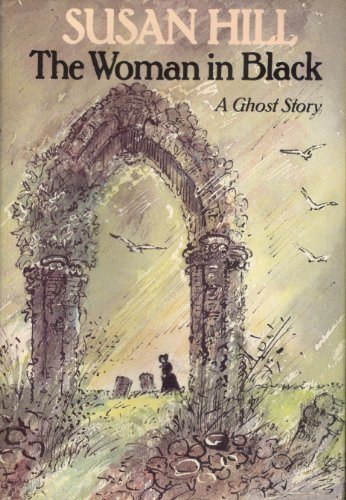
THE WOMAN IN BLACK (1989) - the British TV adaption


Daniel Radcliffe's new movie is hotly anticipated. The Woman in Black is presented by the new incarnation of Hammer Productions, opening in cinemas February in the UK, US and most of Europe. But this isn't the first adaption of the story by any means...

Susan Hill's original novel was first published in 1983, then adapted as a British TV movie in 1989. In that same year, the stage play based on the book arrived in London's West End. The play has been running ever since, popular as a guaranteed spooky evening and turned a little-known ghost story into a huge success and a now a major movie.

The Woman In Black at The Fortune Theatre, London - website.

In readiness, I've revisited the TV version, which was released on DVD in the US in 2000, but now out of print...


THE WOMAN IN BLACK(1989, UK, TV)

Between the World Wars, a young lawyer travels to a remote seaside village to conclude the affairs of a recently deceased widow. But local people are afraid of the old lady's mansion and no-one else pays any attention to the distant figure in black that he sees everywhere...

ITV obviously wanted something pretty damned scary as their Christmas ghost story that year, it first played on Christmas Eve! It certainly has some genuine jolts, but not enough to sustain the feature-length running time. Many other scenes should really be scarier, but the haunting gets repetitive. The stranger's make-up doesn't work for me, either.


This is all despite a good cast headed by Adrian Rawlins (below) as the young lawyer. Considering that Daniel Radcliffe has taken this role in the new film, it's a strange coincidence that Rawlins has since been in several Harry Potter movies, as James Potter. Bernard Hepton is the biggest name but underused. I was delighted to see John Cater (Captain Kronos - Vampire Hunter, The Abominable Dr Phibes) in a short fraught role.


The script should have been a good one, from Nigel Kneale, whose previous TV adaptions made him the obvious choice for this. The Woman In Black also echoes aspects of the haunting in his superb original script for The Stone Tape (1970).

The use of locations is impressive enough and the period-feeling is fairly good for TV, helped by being completely shot on film. But the key locations of the mansion and the causeway weren't nearly daunting enough, the backstory not clear enough to maximise the creeping fear.

Therefore I'm optimistic enough to say that the remake has plenty of room to really improve on a filmed adaption of this story.

According to the
Wikipedia entry (which has spoilers), the TV version was only shown twice before getting a limited VHS and DVD release. With a recent problem over licencing rights, this version is unlikely to be shown again or re-released.
 
That leaves the windblasted field completely clear for the Daniel Radcliffe version...


Wednesday, 2 November 2011

APPROPRIATE ADULT (2011) - Dominic West as Fred West


APPROPRIATE ADULT
(2011, UK, TV)

A horrendous true story that keeps on getting worse... 

The horrifying crimes of Fred and Rosemary West threatened to eclipse those of all previous British serial killers, with ghastly excesses that fuelled tabloid headlines for years. The Moors Murders, a couple that abducted and murdered children, still haunt England from the distant mists of the mid-1960s. These crimes at 25, Cromwell Street, uncovered in the mid-1990s, started with assault and murder in the family home... 

The case set a new low benchmark for inhumanity reported in this country. Not in a war zone. Not on the other side of the world. But in an ordinary street, that could easily have been next door.

The idea of adapting the Wests' story as a TV drama, even fifteen years later, sounded impossible. The amount of sexual violence would be hard to work around on mainstream TV.


I wasn't even going to watch Appropriate Adult until it was announced that Dominic West, star of the acclaimed TV series The Wire, was to play Fred West. This indicated a more serious approach than a lurid reconstruction. For the actor, it was potentially a gamble to play one of the most hated men of recent years.

There's a huge disparity in taste between approaches to true crime on TV. I was surprised by an ITV documentary about the Moors Murders which suffered indifferent acting and poor taste crime recreations. Yet the Channel 4 drama Longford (2006) found an intriguing angle to dramatise part of the story, pitting Jim Broadbent (Brazil) as Lord Longford against Samantha Morton (A.I.) as Myra Hindley. But I wasn't expecting such an intelligent drama about Fred and Rosemary from the more mainstream ITV.


The script cleverly follows an appropriate adult, a civilian (Emily Watson) invited into the case when Fred is arrested to ensure he's being understood by the police, as he's suspected of being mentally vulnerable (there's irony for you). Each time they discover a crime has been committed, the more victims there turn out to be. Sitting in on police interviews with Fred West (Dominic West), she also accompanies him and the police in the hunt for where he might have hidden the bodies. Without his cooperation, there'll be no evidence.


As an investigation, this isn't a barrage of flashy technology cracking the case, like in CSI. It's not built around violent flashbacks, like a horror film. We're simply faced with the suspect, trying to discover what and why he did. Is he as stupid as he looks? Is he lying? It starts with a missing person, but the more the police dig, the more crimes they unearth. 

Emily Watson (soon to be seen in War Horse) is excellent as the 'appropriate adult' brought in without any preparation to hear West's interrogations and confessions. Unfortunately, Fred starts confiding in her, placing her in increasingly difficult quandaries.


Dominic West is frighteningly convincing, all the more chilling because we're hearing some of the words and motivations of the original murderer in an eerie impersonation of him. The distinction between murders that he does or doesn't find upsetting, the casual way he admits to further crimes. Particularly chilling is the way the victims 'speak to him' as he gets closer to where they were buried.


Rosemary West (Monica Dolan) is a frightening figure who's mostly in the background, with an unconcealed violent attitude towards everyone around her. In contrast, the calm and usually relaxed Fred insists she has nothing to do with all of it.

Shown as two feature-length parts, the first was very tight dramatically, showing the short claustrophobic period of his early interrogations. The second part was less satisfying, because it had to match real events, her sporadic involvement struggles to keep the viewpoint inside the investigation to the end.
The whole story can't be told as completely as a work of fiction would, because of the lack of evidence and the labyrinthine legal process. But I wish the programme had been a little clearer about how some of obstacles to the case had been overcome.


This serves as a restrained reminder of what this pair did, without showing the gory details. But also focuses on how hard it is to establish the truth, even with so much circumstantial evidence and the criminals in custody. 


It's not just a situation where an ordinary person is in the same room with someone describing horror, but one where she gets the confidence of and insight into the mind of a psychotic multiple murderer. This took me as close as I wanted to get, and in as much detail as I could take. There are also hints that there were further, even nastier crimes...

It's available on region 2 DVD in the UK (pictured at the top).


Tuesday, 18 October 2011

TARZAN (1966) - Ron Ely TV series

TARZAN
(1966-68, TV, USA)

UPDATE March 8th, 2012 - TARZAN, Season 1 coming to Warner Archives.


Edgar Rice Burroughs invented several popular fictional characters. His John Carter of Mars will be a 2012 blockbuster as well as Pixar's first live-action production.


But n
ext year is the centenary of Burroughs' far more famous creation, a great opportunity to release every Tarzan adaption from the archives. I'm thinking of the 1966 Ron Ely Tarzan TV series. That was the same year of another hit TV show that refuses to hit home video. I've talked about Adam West's Batman and could happily talk about every last one of the 120 episodes Tarzan appeared for two seasons of one hour adventures (57 in all). Unlike many of the early movies, it wasn't shot on a Hollywood studio backlot, but out in the actual jungle. Except, not in Africa.


Shot in Brazil, and later Mexico, the lush jungle locations, village-sized sets, waterfalls, mountains and rivers made this look a million dollars. With interesting, twisty adventure-laden stories and solid casts, the series was repeated for many years on British TV, eventually headlining the Saturday morning line-up into the 1970s. Like Batman, this was so popular and repeatable that it's now imprinted in many young memories, perfectly primed to revisit it on DVD. But this Tarzan is nowhere to be found, except for some double-episodes released as movies that eventually made it to VHS.


Despite a gap of thirty years or more, I can still remember Tarzan's battle against a big game hunter. Hand grenades are lobbed into a river where Tarzan is hiding underwater. He eventually hauls himself out of the water, bleeding from the ears, only to discover that he's wounded, defenceless and deaf (Tarzan's Deadly Silence)... As for his encounter with a dinosaur, I've yet to see the next episode of that two-parter and learn the secret of that shadowy cave. I recently unearthed a scrawled comic strip I drew as a kid, an extensive 'adaption' of that episode. I think I remember a few scenes from the episode, or maybe they're just from the nightmares I had...


The key to the show's success was Tarzan himself. Actor Ron Ely embodies Tarzan for a certain generation. Of the many previous Tarzans, the best Johnny Weissmuller films (Tarzan - The Ape Man, Tarzan and his Mate) were too violent to be shown on TV for many years, eventually surfacing on Channel Four late night in the 80s. I remember the later sequels getting played as seasons on BBC 2, together with the Gordon Scott movies. They're good, but weren't on nearly as often as TV Tarzan.


Ron Ely's incarnation is impressive in many ways. Imposingly well-built, wearing one of the briefest loincloths of any Tarzan, it's hard not to be distracted by his physique every time he's onscreen, which is most of the episode. He can also act, swim, and fight with both men and animals. He's reputed to have done his own stunts and racked up the injuries to prove it. Just running around everywhere barefoot without flinching is quite a feat (sorry).


A
iming at a family audience that kept adults engaged, the episodes often had a tough edge. Fistfights, gunfights, knife fights, constant peril and occasionally deaths! A young boy (Manuel Padilla Jr, later seen all grown up in American Graffiti) is the only other regular cast member (as well as Cheetah the cheeky chimp), but otherwise the stories don't pander to a young audience.


The main reason I think the series hasn't stayed in circulation is the portrayal of black Africans. While it's set 'in the now' with the latest vehicles, firearms and fashions, Africans are still portrayed as they were in the original stories, as tribal communities living in small villages of primitive huts, wearing animal skins and war paint. This may have been acceptable in the movies of the 1930s, but was entirely misleading by 1966, as if it had been researched from a travel brochure.


The approach is duly counterweighted by a few 'modern' black characters like the local game warden (Rockne Tarkington of Daktari and Danger Island), who regularly appeared in the early episodes, as well as guest appearances from other American actors like the formidable Woody Strode (Spartacus) and Bernie Hamilton (Starsky & Hutch).


The mid-sixties roster of ever-changing guest stars adds to the nostalgia, including James Earl Jones, Nichelle Nichols (Star Trek), Maurice Evans (Planet of the Apes), William Marshall (Blacula) and Julie Harris (The Haunting)... With high production values and the frankly awesome Ron Ely, the series is notably missing from circulation.


Afterwards, Ron Ely's most famous role was that of Doc Savage - Man of Bronze (1975), the only movie incarnation of that pulp detective action hero.

Cinema Retro has also bemoaned the serious lack of DVD...


Here's the series title sequence...


Friday, 16 September 2011

DEMON WITH A GLASS HAND (1964) - a monochrome BLADE RUNNER


I can't stay away from The Outer Limits for very long and return to them more often than The Twilight Zone. The stories are more detailed, less predictable, less fanciful, usually scary and often cosmically mind-expanding. The original 1963-1965 run is easily in my top ten TV series. Beautifully directed and photographed in black and white, with familiar and surprising faces in the cast (Martin Sheen, Robert Duvall, Bruce Dern, Donald Pleasence...). The stand-alone stories sometimes pack enough ideas into a TV hour to blow away most sci-fi B-movies and many A-list productions as well. Sometimes, not all.

I first watched them on late night TV at the end of the 1970s (Friday nights on BBC2), primed by monster magazines that there'd be weekly creatures and aliens - outlandish man-in-a-mask creations, but also shapeless entities, things made only of energy, beings from different dimensions... each with their own very different story, challenging the scientific status quo.


The Control Voice alone, setting up and summing up each episode, through a broken TV transmission, authoritatively prepared us for the wonders and dangers of the future, and to appreciate better the size of the Universe and the potential variety within. Even the worst monsters and outlandish stories get high marks for at least taking themselves seriously, an approach which could still easily convince me, watching on my own, slightly wasted, sometime way after midnight.


Many years ago, my initial response to Demon With A Glass Hand was muted, the scary 'bear' of the week was disappointing - a guy with a transparent hand and some cheap-looking aliens. I wish they hadn't worn those rubber caps, but the 'ghoul' make-up is effective enough. A lone human (Culp) is trying to evade the murderous aliens and complete his mission. His hand has been replaced by fingerless glass, missing a few fingers but full of electronics issuing him instructions. In a classic script ploy, he has no memory before the story started, putting him in the same position as the audience as to what the bloody hell is going on.


Why are they all trying to kill him? What is his mission? While working his way up the building, getting closer to the truth, he encounters a young woman who's horrified by his transparent hand. Her reaction partially explains the episode title, but it's a cheat.


It's a gripping episode, the hero using tough tactics from the very start to get to the truth. It's exciting because he's outnumbered, it's fascinating because of the mysteries piling up from the clues from his talking hand... Unlike much sci-fi, the seemingly bizarre story elements converge and conclude logically, while still leaving the viewer a few implications to mull over.


There are two editions of the appreciative and informative series companion, introducing the many creative minds behind the series, script decisions, special effects and a critical analysis of each episode - not the kind of scrutiny most TV series can justify in such detail. The more recent publication (on the right) has been revised, expanded and printed on less pulpy paper. I didn't initially appreciate the cult status of this particular episode, compared to my many other favourites. But watching through the second series again, I relaxed and really enjoyed it, particularly it's premonitions of Blade Runner...

I'm not just talking about the main location for the episode - most of it takes place inside the Bradbury Building, the scene of Rick Deckard's main confrontation in the film. Demon also has the protagonists working their way up the Bradbury, and even chasing out the window... An astonishing piece of parallel action with the film.


This time around I was also struck by the naked shoproom dummies in the dressmaking shop. Female dummies also appear in Blade Runner, stood outside J.F. Sebastian's apartment, also filmed in the Bradbury Building. The location, the symbolism, the themes of both stories overlapping, possibly intentionally, making this the closest you can get to Blade Runner if it was shot in black-and-white and twenty years earlier.


The story is packed with so many ideas, the episode could easily have expanded to feature-length. The fact that they're crammed into a TV hour makes it rich enough for fans of serious science fiction. Some elements of the story prefigure Blade Runner as well as The Terminator - Harlan Ellison wrote this and the episode Soldier, later suing James Cameron for lifting too many ideas from these scripts. Spoilerage prevents me from elaborating on which particular elements of the plot.

I had thought of cherrypicking my top ten episodes of the original Outer Limits as must-see, but it's too good a show to divide up. Watch them all. Pick your own favourites. They're all available on DVD in the US and UK.


A thorough (though spoilery) guide to the series, with plenty of screengrabs and some rare stills, plus a review of every single episode, all on this blog in collaboration with the David J. Schow, the author of The Outer Limits Companion, We Are Controlling Transmission...