Friday, 21 May 2010

THE SURVIVOR (1980) - first and best James Herbert adaption


THE SURVIVOR
(1980, Australia)


A ghoulish mystery that should have been the best James Herbert horror movie

 UPDATED March 2012 - now on DVD in the USA 


A chance discovery of a paperback of The Rats in a New Malden newsagents warped my fragile little mind, and made me very interested in James Herbert's horror novels. For a schoolboy in the mid-seventies, his early books were gold - extremely eventful apocalyptic horror and even imaginatively deviant sexual content made him a forerunner to Clive Barker and Shaun Hutson. Indeed, his were the first modern horror books that I read - Stephen King hadn't even published Carrie yet. The Fog and The Survivor were his next two novels, and made the deepest impressions on me.


When John Carpenter's The Fog rolled into UK cinemas in 1980, we Brits assumed that there was only one story called The Fog and the movie was an adaption of Herbert's novel. We only discovered this wasn't the case in the cinema - there was no publicity to warn us otherwise.


The same year, this Australian adaption of The Survivor became the first James Herbert novel to be filmed. Then a US adaption of The Rats (also called Deadly Eyes), but nothing in that film echoed my favourite episodes from the book, and the VHS was so damned dark you could barely see the little critters enjoying their human dinners. Herbert's non-horror Fluke and the non-scary Haunted followed later, making The Survivor the most interesting film of his novels to this date. However if someone like Neil Marshall could film the gory and debauched action of The Fog novel, that would make a wonderful horror epic.


But The Survivor isn't totally satisfying. It's not the best Australian horror film of the period, despite being the most expensive (as noted in the recent Ozploitation documentary
Not Quite Hollywood). I've always put it's failures down to seeing shortened versions and pan-and-scanned VHS tapes. Now I've finally seen it widescreen 2.35 on DVD, it doesn't make much more sense. Indeed the trailer (see below) offers more clues than the movie.
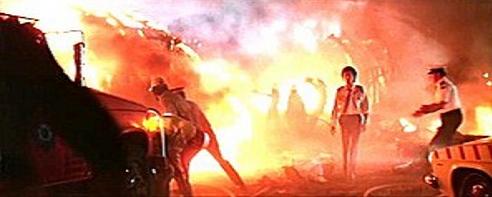


A commercial 747 jet crash lands in an Australian suburb (if it wasn't for the accents, you'd mistake this for the British setting of the book). It had just taken off so the fuel tanks are full. The resulting inferno kills everyone onboard... except for one survivor who staggers from the wreckage - the pilot (Robert Powell).
As the crash investigators trawl through the pieces and the bodies, the pilot can't tell them why the plane fell out of the sky, due to memory loss. As the remaining wreckage is laid out in a huge hangar, some of the witnesses start seeing a little girl who leads them to a violent death...

With several ongoing mysteries
, this should be far more interesting, but the story soon loses its way. The mounting mysterious death toll of witnesses is only once mentioned in a throwaway line. Meaning that it's only really a mystery to us, not to any other character. The story concentrates on the pilot's memory loss, but a local witness (Jenny Agutter) seems to know more, and is far more upset about the crash. Worse still for a horror film, the death scenes are really vague, too offscreen, too slowly-paced. Instead of competing with The Texas Chain Saw Massacre, the director prefers to quote from The Leopard Man (1943). Hardly a match for the violent, disastrous premise. The burns make-up on the crash victims is slightly unsettling, but only the constant screaming that haunts the wreckage is at all effective.

The screams aren't enough to make this nearly as horrific as Herbert's novel. His central story survives, which is what helps the ending to work so well. But along the way, there's not enough sense made of what's happening, that could have built tension for the rest of the running time.
The highlights are the full-scale 747 crash at the start and the spectacular and eerie climax. The crash isn't as devastating as Final Destination, but is impressive nonetheless. The crash site and the investigation hangar are also both realistically and uncomfortably depicted.


Robert Powell (Mahler, Jesus of Nazareth, Asylum) is good, perfectly cast for his haunted look, (he'd just starred in another Australian chiller, Harlequin). He's currently a regular in the soapy UK medical TV drama, Holby City.
Jenny Agutter does the best work, bringing more urgency and intensity to the situation, showcased in a long take where she has to wrestle with her inner demons. Agutter's first Australian film was of course Nicolas Roeg's impressive Walkabout (1971). Her next horror role followed almost immediately - the classic An American Werewolf in London.
Joseph Cotten (Citizen Kane, The Abominable Dr Phibes) is wasted as a priest. And he looks wasted too. This was one of his last screen appearances before he retired from acting.

Knighted Brit Tim Rice (who wrote lyrics for Evita and The Lion King) briefly cameos as a news reporter - I have no idea why.
The memorable soundtrack is composed by the late Brian May, halfway between scoring Mad Max one and two.

David Hemmings is better known as a leading actor in cult movies (Blowup, Barbarella, Deep Red) rather than as a director, probably because his movies are so forgettable. I'm guessing more people have seen his TV work than his films. I love that he directed episodes of The A-Team and Airwolf - about as far from Antonioni as you can get.


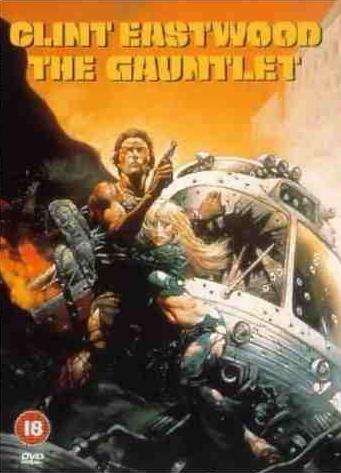
The recent UK DVD release (with the fiery plane crash photo cover, shown at top) is 2.35 anamorphic and is a longer version than the Australian DVD (also avoid the older UK skull-faced DVD - it's been cropped to fullscreen). The picture is slightly soft but made from a print in good shape. My copy had a couple of deafening digital audio faults that providing the biggest shocks in the entire film.

This Australian review of their DVD release mentions a running time of 78 mins and a cropped 16:9 aspect. So many compromised editions of the film have been released, I've put off getting this on DVD until now.

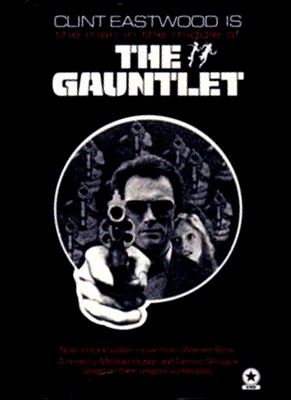
In April 2012, Scorpion will release a DVD in the US (artwork above). I'll add details when I get them.
Here's an original trailer on YouTube, spoiling most of the movies highlights...

Monday, 17 May 2010

Horror Flicks

So I have recently been watching a lot of movies, including some good and not so good ones. I signed up for netflix again, and now they have the instant watch movies. It helps that I got a new cpu with a high def screen. Last time I had netflix they didn't really hype up the instant watch movies. Now they have thousands of movies to choose from! I love that you can watch a movie online now or just watch a tv show you missed on the cpu, life has never been easier to attain the media you would like. So here are some of the horror movies I have watched recently:

Necrosis : I will start out with a shout out for this movie because my uncle was assistant director on this one. Necrosis is a stuck in a cabin, snow in type movie. It has to do with seeing ghosts of the Donner party. I think for a low budget movie it sets out what it means to do, namely it has some good scares and is interesting for most of the movie. Look for brief parts from pop star Tiffany and horror legend Michael Berryman. Here is the trailer:


Dead Snow: I watched this with my friend Dennis (click HERE to see his review). We both had about the same thoughts on Dead Snow, it has its moments but overall is nothing worth getting too hyped up over. I do like that it has to do with nazi zombies, thats a lethal combo! The movie took too long to get started and like Necrosis is a trapped in the snow type movie. They had some good romero type zombie kills in the movie as well. Overall this is a just an average type rental. I would say rent this and Necrosis back to back and have a snow in horror movie night.


Drive Thru : I was flipping the channels late one night with my buddy Jeremy and happened to see the description for Drive Thru on the On Demand menu. It said something about Horny the clown killing people, and I new I had to watch it immediately! It starts out really promising with some wiggas getting deep fried but overall the movie just is a let down. It does have some funny puns that relate to fast food, and they story is a total rip off of Nightmare on Elm Street. I hear they are doing a sequel to this, good luck. I will say it does have some laughs so I guess I wouldn't say it was a total bust for being a free watch.


Behind the Mask: The Rise of Leslie Vernon: I got a recommendation to check out this movie from a friend and I thought it was the best out of all the movies I have listed here. I really didn't know what to expect when I went into seeing it but I was really shocked how good it was. If you like slasher movies I think you enjoy this behind the scenes look. You get to know Leslie Vernon as he plans his murders, you get to know the killer and why he kills. There a few good twists and I thought this was a smart way to do a slasher movie, switching between a documentary style and horror movie style. I have heard they are doing a sequel, I am on board for that!

Friday, 14 May 2010

THE NANKING MASSACRE - two films to remind us


Why do I do this to myself? First I watch two intensely depressing dramatic recreations of war atrocities, intense enough to haunt me for days. Then I decide to review them, challenging my love of Japan with these accounts of atrocious conduct by their armed forces.

In 1937, when Japan was invading China, its armies conquered the (then) capital city of Nanking. The Japanese army then began killing the prisoners of war, then the civilians, to strike a psychological blow to the rest of China. Knowing full well that they were breaking international conventions of war, they disguised the massacre from the rest of the world.

These are two very different films about the siege, serving two audiences: one is obviously intended for 'international cinema', the other (possibly unintentionally) is 'exploitation'.

Though they're tough viewing, knowing that these events actually happened, I wanted to learn more about the depths that the Japanese army sank to. While I admire Japanese culture, pop and otherwise, I've mainly been learning about their history from their viewpoint. But after visiting several of Japan's neighbouring countries and reading their news sites, I became increasingly aware of 'old wounds' and lasting hostilities.

While the US and Europe are hyper-conscious of the history of Nazi Germany, we mainly remember wartime Japan for Pearl Harbor and Hiroshima. In China, Korea, Malaysia and the Philippines, Japan was regarded the same way we saw Germany. Indeed, the scale of Japanese war crimes and the variety of atrocities rivals Nazi Germany.

So I'm having trouble joining the dots between their peace-loving society of today and the extremes of their wartime mindset. How can a country change so quickly and so completely? I guess the answer is closer to home - my own country has much to answer for in it's conduct abroad, both recently and historically.

I'm not going to boycott Japanese culture for the crimes of the past, but I'm not going to ignore history either. When I first heard of the 'Rape of Nanking', I naively assumed it happened centuries ago in more barbaric times. To find that it was only last century showed up a large gap in my historical knowledge.


BLACK SUN: THE NANKING MASSACRE,
MEN BEHIND THE SUN 4
(1994, Hong Kong, Hei tai yang: Nan Jing da tu sha)


Relentless gory propaganda

This is a weird film that would need much more research to determine what the film-makers were trying to do, if I was at all impressed by it. The director, T F Mou, denies it's an exploitation film, and the size of the budget seems to lift the project out of that genre. But it's an endless diary of gory re-enactments of war atrocities, with little story or drama, and a near absence of continuing characters. The Japanese soldiers storm around the city, killing and raping. The commanders take pleasure in trying out various methods of execution, from machine-gun to samurai sword.

It looks like a wartime propaganda film, but it was made 1994. I'm almost guessing it was intended to pressure the Japanese government on outstanding issues - maybe compensation, apologies, selective history books? The other likely result was to incite outrage amongst Chinese audiences.

Compare this blunt approach to any modern American movie about the Nazis. One moment in Black Sun made me remember a silent movie where Eric Von Stroheim throws a baby out of a high window. The scene looked comical: a swift but lazy cinematic shorthand to make you hate the character in seconds, and tell you what to think about all German commanders.

While City of Life and Death shows only one Japanese leader orchestrating the destruction of the city, Black Sun takes pains to name and shame many different commanders and their personal roles in the killing. This is perhaps another clue to the movie's intentions.

After a while, the many shock moments reminded me of the climax to Soldier Blue, but in contrast with it's involving characters, storyline and complex portrayal of the invaders as well as the invaded (Soldier Blue himself is shocked by his own sides' misconduct). The Japanese soldiers of Black Sun are portrayed with a uniform hive mentality. It also doesn't help that the Japanese soldiers all look very Chinese. Only the commanders look as if they're played by Japanese actors. Lazily and inaccurately, the soldiers of both sides talk in Chinese.

I expected this to be far more cheaply made than it is. It looks largely authentic, uses a lot of extras and some extensive locations. The most spectacular scene illustrates how the Japanese burned the bodies of civilians before dumping them in the river. They could then claim that they'd only killed soldiers. The scale of the fire of hundreds of bodies along a riverbank rivals the inferno at the end of Apocalypse Now.

But if there's any doubt that what we're being shown happened, the catalogue of atrocities is verified onscreen, by cross-cutting with actual photographs and filmed footage. The power and importance of these images was not lost on the Japanese army who made every effort to destroy any incriminating material that left Nanking at the time, and they burnt any such evidence of their own when the war was lost.

There's no doubt that all this and worse actually happened, but without any emotional involvement and a clumsy, one-sided approach, it's a far less powerful and informative film than it should have been.

I watched the US region 1 DVD, which fills in much of the historical context with an informative old documentary episode of Frank Capra's Why We Fight as a DVD extra.


In the UK, it's purely been sold as exploitation, check out the crass DVD cover, which somehow borders on comedy, using a poorly staged publicity shot of one of the film's most infamous scenes. Contrast that with the US DVD cover that uses an actual archive photograph.

This is actually the fourth in a series of films, called Men Behind the Sun, which I won't be investigating any further. The first film in the series has an important subject, the horrifying human experiments of Camp 731, but the inclusion of animal cruelty and mondo footage (using an actual corpse for one scene) means I'll avoid it. However, the story of Camp 731 has one hell of conspiracy storyline and I'd like to learn more about it.

Black Sun is a bizarre experience - as it abandons so many movie conventions - that it's fairly silly to compare it to the professionally and artfully produced City of Life and Death. But I have.


CITY OF LIFE AND DEATH
(2009, China/Hong Kong, Nanjing! Nanjing!)

An involving man-made disaster

This major new film, shot in black and white, is still being premiered round the world. It's also about the Nanking during the Japanese siege.

While Black Sun throws out plenty of factual context in captions and voiceovers, this has no such introduction and relies on small badly-written postcards to set up a little historical background. Black Sun also portrayed the Chinese, soldiers and civilians alike, as totally defeated. This begins with the army still defending itself, albeit with guerrilla tactics. It also sets up storylines with soldiers from both armies, one Japanese soldier being just as traumatised.


The success of the film is the emotional involvement with the characters, focussing on the family of the Chinese translator to John Rabe - a German envoy famous for his attempts to protect the civilians against impossible odds.

Unlike Black Sun, if anyone gets hurt, raped, slaughtered, the impact is devastating. There's a dreadful scene that's basically a point of view experience of being herded into a mass slaughter.


After the threat of counterforce has been systematically eradicated, the invading army are rewarded with 'comfort women', Japanese prostitutes rationed out to the soldiers. But as the siege wears on, the supply of women starts taking Chinese 'volunteers'. The widescale use of civilian women for sex lends an awful, literal meaning to 'the rape of Nanking'.

While the Japanese use of unnecessary force was meant to terrify the rest of China, it instead unified the regions of the massive country into an unbeatable foe.

The inclusion of a sympathetic portrayal of a Japanese soldier has drawn criticism from Chinese critics, complaining that the tone of the film wasn't harsh enough on the Japanese. Perhaps they would have preferred a less-sensitive, less balanced film, like Black Sun perhaps?


I'd recommend City of Life and Death as a beautifully made and observed film on a harrowing subject.

It had a limited cinema release in the UK and there'll be a DVD and Blu-Ray release in August. I watched a Chinese DVD, which may be slightly censored (missing some violence). The subtitles didn't translate all the onscreen signs and nameplates.

The excellent WildGrounds site has an article comparing City of Life and Death to actual (and upsetting) photos from the siege.


Saturday, 8 May 2010

THE GAUNTLET (1977) - Clint Eastwood does action comedy

THE GAUNTLET
(1977, USA)

Clint takes on the awesome firepower of... the Arizona police force!

Clint Eastwood has worked long and hard both in front of and behind the camera. While he first proved his directing skills with Play Misty For Me way back in 1971, his seventies thrillers gave way to more personal, less successful films in the eighties.

To keep going, he often fell back on his Dirty Harry image, which he does with The Gauntlet, but cleverly so. From the publicity, his character looks like another tough cop. But he plays an under-achiever, an alcoholic has-been who's coasting towards retirement, still a long way off.

When the loser of the force, Ben Shockley (Eastwood), gets an assignment so simple even he can't screw it up, he's slow to realise his situation. The prostitute (Sondra Locke) he's sent to escort from Vegas to Phoenix is scared and paranoid, but what could she know? As soon as they start the trip home, he's surprised when it seems everyone is out to kill them, by every means necessary!


While this is often a logic-stretching action film, it's also tongue-in-cheek, hinted at by the Frank Frazetta poster art, showing a superman cop, his clothes in tatters, looking like Conan The Barbarian, (Frazetta also painted the famous series of Conan paperback covers). In terms of tone, this could be Die Hard in the desert, but ten years before John McClane's first movie.

While it's Clint doing mainstream comedy action, it doesn't pull its punches - there's death, despair, rape! What Clint often doesn't get credit for is his continually careful scripting of women characters - as realistic, strong and equal. They show up the men and play on their weaknesses. His character also has a different moral core to John McClane. However dire the situation, he doesn't seem to kill anyone!


The paradox of Dirty Harry is that Harry Callaghan is a cop in a judicial system that's so restrictive, he can only get the job done by breaking the law. In The Gauntlet, the police force are again under fire. Besides Shockley and his buddy in the force (Pat Hingle), the law are shown as either corrupt, depraved or blindly following orders. The majority of cops appear as a huge, mindless execution party with no restraint over the use of excessive force. But this isn't a direct comment about the police (this is years before Waco), rather a typical story of a hero facing impossible odds.

At the time, the publicity for The Gauntlet was based on the action scenes, boasting 'the most number of bullet hits in a single scene', as an entire house is literally shot to pieces by hundreds of rounds. While the special effects crew planted thousands of squibs (explosive charges buried in the set to simulate bullet hits), don't tell me it wasn't easier just to shoot the hell out of everything.


Now I could watch helicopters all day long. It's a thrill to watch them lift straight up and hover. Cinematically they enable chase scenes over any terrain, as well as water (my favourite helicopter scenes include Apocalypse Now, The Spy Who Loved Me and Shaft's Big Score). The Gauntlet has a fantastic action centrepiece with some breath-taking stunt flying as Clint is chased through the mountains by a sharp-shooting assassin. Don't tell me that it's more dangerous than it looks - flying low through mountain canyons, electricity pylons and telephone poles.

The Gauntlet is even better than I remembered. Seeing it in the cinema as a teenager, I wanted more action and more blood. Seeing it now, the action is fun, but verges on the ridiculous. It's the sparky dialogue between Eastwood and Sondra Locke that keeps it continually entertaining.

What Clint did next was drift between orangutan comedies (Every Which Way But Loose and sequel), more Dirty Harry sequels and assorted cop thrillers, thinking in Russian in Firefox, and directing personal flops like Bronco Billy and Honkytonk Man. I'm summarising wildly, he's always one to watch, but I don't think he got the recognition he deserved until The Unforgiven.


Why his orangutan movies of this era are better remembered than The Gauntlet is beyond me. But somebody likes it, because it's now on Blu-Ray.


Once I get my life out of boxes again, I'll dig out some of the original magazine coverage of The Gauntlet for this article.

Meanwhile, here's an interesting aspect of The Gauntlet highlighted here on Some Came Running.

The Gauntlet Blu-Ray gets inspected at DVD Beaver here.

Wednesday, 5 May 2010

CURSE, DEATH & SPIRIT (1992) - Hideo Nakata warms up for RING

CURSE, DEATH & SPIRIT
(1992, Japan, TV)

Homework for fans of the original Ring

I'd read about this in The Ring Companion but never thought I'd get a chance to see it - there isn't even a DVD in Japan. Luckily Curse, Death & Spirit has been released in the US.


The choice of Hideo Nakata to direct the original horror movie that launched J-horror, Ring (1998), looks less like a lucky guess if you see some of his earlier work. Particularly this made-for-TV trilogy, and the movie Ghost Actress (1996, aka Don't Look Up). It all looks uncannily like preparation, as if he'd been set homework six years earlier.

These three short stories, barely twenty minutes each, were made for TV in 1992. They're full of scares and ideas in the same vein that Nakata would explore in Ring and Dark Water (2002).


The Cursed Doll - could have been exceptionally creepy, but the doll is shown too much and initially brought to life with some poor video effects. The story builds well to a climax that certainly has bite. It's all good practice for turning the otherwise ordinary rooms of a Japanese home into a scary place, looking like the house in the opening scenes of Ring.

The Spirit of Death - has a mother and son on a troubled camping trip, echoing the absent father scenario of Dark Water, and again up against a watery spirit. This has some original scares and benefits from the outdoor location.

The Haunted Inn - has three teenage girls book into an inn, one of which is playing with a video camera. Together they fall foul of the history of the building and end up tangling with a long-haired ghost.

The stories are too ambitious for the time and money available. With a rushed TV schedule, unsophisticated camerawork and lighting, these are lightly creepy at best. The basic video effects, especially in The Cursed Doll, almost looking like a work-in-progress. Given more resources, this would have been good to develop as a film project, the same way that Takeshi Shimizu's Grudge films graduated from video.

The acting is solid, Nakata already getting convincing performances from even the youngest actors - namely the little boy in The Spirit of Death.

These are mainly interesting in retrospect, because of the many familiar echoes of the director's later films (assuming the past can echo the future!). They're also mildly rewarding for some scares he hasn't yet reused, like the restless doll, the ghost in the mirror, and the sneaky spirit of the lake...


It looks very much like 1970s' TV - it's presented 4:3 full-frame. The video colours look pretty flat and ungraded, the picture hasn't been film-moded - all of which could have slightly helped the look. The DVD is presented by Asia Vision in the US.

In the UK, it can be found as a DVD extra on the Tartan UK release of Hideo Nakata's Chaos. (Thanks to Phil for that update).

Here's another review, with screengrabs, at Sarudama.

My coverage of the Ring phenomenon is here.


A loud, Japanese, spoilered trailer for Curse, Death & Spirit here on YouTube...


Friday, 30 April 2010

ULTRAMAN (1966) - perfect for Godzilla addicts


ULTRAMAN
(1966, Japan, TV)

Godzilla meets Thunderbirds...

A giant superhero who fights a different giant monster every week is the basis for this slightly futuristic live-action Japanese series made in 1966. It gave birth to an entire genre of Japanese TV.

Special effects supervisor Eiji Tsuburaya wanted to translate the success of Toho's sci-fi spectaculars, headed by the
Godzilla films, into a TV series. Ultra Q was the result, a team of paranormal investigators who often meet giant monsters. The format was improved on in Ultraman, by having a giant hero better able to fight the gigantic problems.


They also introduced the Science Patrol, a better equipped squad than the Ultra Q team. They've a huge base, special cars, the latest weapons and a VTOL aircraft. One of the patrol members secretly has the ability to transform into visiting alien, Ultraman.
Despite the rigid format - Ultraman must fight a monster every episode - the stories are very varied, as are the locations. The continuing draw of these two dozen series, for me, is the wide variety of monsters.


Yes, it's two men in suits throwing each other around, but for anyone who's run out of Godzilla movies to watch, Ultraman is the next best thing. Modified Godzilla suits even appear in the series, with added frills and paint jobs.
The colourful, often fanciful, monster designs naturally lent themselves to extensive ranges of toys and merchandise. The most popular monsters re-appear in later series, a few becoming familiar icons in Japanese pop culture.

The first series of Ultraman is aimed at children, with hammy crew member Ide as a childish comedy relief, and a young boy in the regular cast. Ultraman sometimes even plays around with the monsters during fights, like riding on their backs (which just looks wrong to my fertile mind).

Like early Doctor Who, which influenced the series, there are a few quite frightening monsters (glowing eyes in the dark always work for me) and many incidental characters even die. Ultraman also disfigures, blinds or tears limbs off his monster opponents before killing them! These occasionally bloody displays seem at odds with the otherwise childish tone. The creatures sometimes die slowly, twitching in their death throes before finding peace. Later series would be far kinder to monsters (except the really bad ones), even relocating them back home, and very few human characters died.


Ultraman has beautiful miniature sets for the monsters to roam around in, but the aircraft models are far less intricate than Thunderbirds, shot in the UK the same year. I guess that having to keep the aircraft in scale with Ultraman meant that the model couldn't be as large as the Thunderbird models.

The budgets are quite large compared to many later series, with lots of extras running around, varied locations
, and widescale action scenes.

A huge success, it lead to many more Ultraman TV series, which are still being produced, and some span off into movies, like Ultraman Next. It also inspired a boom in similar superhero shows from other studios, like Spectreman. Toei Studios' biggest hit scaled down the monster fights to human-size, pitching a roster of alien creatures against the beetleman biker hero, Kamen Rider.


Ultraman was dubbed into English and transmitted in the US. So the region 1 DVD set offers the English dub as well as an option for Japanese with subtitles. The picture looks extremely good, digitally remastered and restored, not looking its age at all. The set of 40 episodes was first released on six DVDs as two boxsets, but has already been re-released at a lower price on four DVDs.


It's a rare example of Ultraman on US DVD (Ultraman Tiga is the only other). I'd love to see the early follow-up, Ultraseven, with its tougher tone.


We never saw any Ultraman in the UK. So I first started watching it after discovering dozens of episodes on VCDs in Chinatown. While the earlier series have their charms, I prefer the revitalisation of the format that began with Ultraman Tiga, with it's better special FX and sleeker designs for the greatly expanded Earth defence fleet. With a variety of bases and launch procedures, the influence of Thunderbirds is still very evident.


Since Tiga, there's been a regular Ultraman series almost yearly, with year-round episodes. Last year there was another movie spin-off that brought back every previous incarnation of Ultraman for a Mega Monster Battle! It's just been released on DVD and Blu-Ray in Japan and Hong Kong.


Sunday, 25 April 2010

3D or not 3D


Ok so lately 3D has been bugging me, I like the notion of a movie being made better by seeing it in 3D and lately it seems that most movie companies make a movie into a 3D event because it makes more money that way. Avatar sort of started this craze on it's way to becoming the top grossing movie of all time. The movie was pretty good to me, and was worth seeing in IMAX 3D because it was filmed to be seen that way. I have no problem with Avatar (well besides that it wasn't even that great of a movie) but I wish it never started this whole 3D trend because now everything is being released in 3D, as the next 3D movie event! Please. Give me a fucking break. I cannot say I am not to blame, when I go see a movie with a friend they end up wanting to see it in 3D and being an avid movie goer (and usually a nice friend) I agree to pay the $3 extra and see it in 3D.

The recent movies I have seen in 3D are: Avatar, Alice In Wonderland, and Clash of the Titans. After seeing all three only one was really needed to be seen in 3D, Avatar. The others were not really needed to be in 3D because being in that medium did not add anything of great value to the story. Alice In Wonderland was an average movie to me, nothing really extraordinary going on and the 3D was not really used to make it better in anyway. Clash of the Titans is where I get pissed. So I learned there is two ways to do 3D, one is when they change the movie into 3D after the film is done which = shitty 3D. The other way is when the movie is actually filmed in 3D the entire way, which is the actual only way I will now see 3D movies.

I have also heard that 3D prices are on the rise, which is another thing I find to be lame. With more and more 3D movies out you think the price would decrease not increase. One major problem I have is that they do not allow you to reuse your 3D glasses (if they are the same ones you bought last time). Then they want you to recycle the glasses after the movie, I feel if I paid for them why the hell shouldn't I keep them? But then if I do keep them I just have like 4 pairs of useless 3D glasses. So I am saying maybe they cut you a discount if you have the 3D glasses, maybe just half off the extra $3 or something, nothing major but I feel there is a need for some sort of discount for people who already have purchased the glasses. Similar to when you bring your own bag to Safeway and get a small discount for not needing to use their bags, plus both examples save resources (or does anyone know if they re-use those glasses after the movie?).


The 3D craze seems hear to stay. I recently asked my dad, a movie goer since birth if he thought that 3D was just a passing fad. He said it usually has been in the past and I was hoping he was right. I don't see the need to see every movie in 3D. Yes the positive is that it leads to some cool visual effects and if used correctly can make a movie fun. It is also helping Hollywood to release some projects they may not get the green-light otherwise, and it is always good when movies make money because they can possibly make more movies or give someone new a chance to showcase their skills. But I also see the upcoming 3D releases on the horizon and 3D seems here to stay, at least for a while longer.

Upcoming 3D movies:
Shrek Ever After
Toy Story 3
The Last Airbender
Despicable Me
Cats & Dogs: Revenge of Kitty Galore
Step Up 3-D
Piranha 3D
Resident Evil: Afterlife
Legend of the Guardians: Owls of Ga'Hoole
Jackass 3D
Tron Legacy
and many more....

So what I am seeing here is a lot of children's movies as well as a few horror movies. The one's that I would want to see is, Piranha 3D and Tron Legacy. I think I will pass on Jackass 3D, but it may be the first movie to have a 3D penis, so its got that going for it.


To be nice I will list the top movies that I think 3D has added to the movie. These films are Monster House, Avatar, and My Bloody Valentine. In fact I would say My Bloody would be almost unwatchable but the 3D made it into a fun movie, they did a good job using 3D on that one. I recently watched Avatar in non 3D, and to be honest I didn't think less of it. The movie is visually stunning either way and I could focus more on colors in regular 2D.